Hamilton's Organic Waste Facility Draws Strong Industry Interest
Published on 18 September 2026
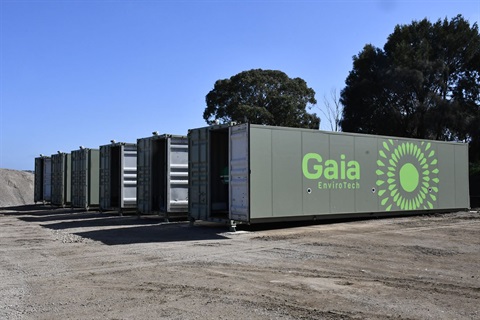
Farmers, business leaders, agricultural experts and waste industry professionals have helped shape the next chapter of Southern Grampians Shire Council's organics processing facility, which is edging closer to operation.
Guests who attended the recent Sustainability Business Breakfast heard from technology partner Gaia Envirotech Dr Lachlan Speirs and Council representatives before touring the developing facility at the Hamilton Transfer Station, gaining a firsthand look at how the project is set to transform organic waste.
Southern Grampians Shire Council Mayor Cr Dennis Heslin said the quality of the discussion was just as valuable as the attendance.
“The strong turnout reflects the excitement and genuine interest surrounding what this project could mean for the future of our region,” Cr Heslin said.
“Hearing from people who are passionate about sustainability and invested in our community's future is incredibly valuable. Their feedback, thoughtful questions and insights will help us shape a project to deliver lasting benefits for generations to come and importantly is able to deliver practical solutions to waste problems.”
When it starts production this year, the Hamilton Organics Processing Facility will initially process more than 5,000 tonnes of organic material each year, with EPA approval allowing capacity to eventually increase to 15,000 tonnes.
Around 2,500 tonnes of household FOGO is collected in the Southern Grampians each year, with a further 2,500 tonnes of organic material expected from the Hamilton Regional Livestock Exchange (HRLX).
Rather than sending that material out of the Shire, the facility will use controlled composting processes to transform it into compost and soil products, creating an opportunity to recover value from material that would ordinarily head outside the Shire. This also means cost savings for Council in transporting green waste out of our Shire.
For a region built around agriculture, the potential applications go well beyond Council’s own waste stream.
Most neighbouring councils currently transport their organic waste to processing facilities further afield, with some even driving through our Shire to get there. A larger Hamilton facility could provide a local or regional alternative, reducing the need to transport organic material long distances while creating a locally produced resource.
“We believe we can become a regional solution. We can take their waste and then we sell the by-product once the facility has finished processing it,” he said. “We could also have the capability to process materials like seaweed, which presents challenges for coastal councils.
Southern Grampians Shire Council Manager Waste and Sustainability Juan Donis said the opportunity to bring people together early was an important part of the project.
“The questions and conversations we had today showed there is a real appetite to understand what this facility can do and how industry might work with it,” Mr Donis said.
The Hamilton Organics Processing Facility is expected to commence production in late 2026.
More details about this project can be found on Council’s website.
-Ends-